
Best overall shortlist for routine hiring: Checkr. Best for international screening: HireRight. Best for complex enterprise programs: First Advantage. This 2026 guide compares background check services for employers by screening purpose, operating scope, and the evidence you need before making an employment decision.
- Checkr leads this background check services for employers shortlist for routine hiring workflows; verify package scope before contracting.
- HireRight suits international screening; First Advantage suits complex enterprise programs requiring detailed procurement review.
- Cyberharpoon suits executive threat investigations alongside, not instead of, a separate employment-screening process.
- Select employment screening around consent, accurate records, candidate disputes, and lawful decision procedures.
Why this matters
A criminal-record search, an employment verification, and an executive threat investigation answer different questions. Buying one does not establish that you have completed the others. In 2026, your first procurement decision is the purpose of the investigation, not the length of a provider’s search menu.
Cyberharpoon provides background checks, OSINT investigations, and executive and brand-protection monitoring. Those services belong in a different evaluation track from routine employment screening unless the proposed engagement explicitly addresses employment use and applicable legal requirements.
For US employers, the Fair Credit Reporting Act governs employment use of consumer reports obtained from consumer reporting agencies. State and local requirements also affect screening and hiring decisions. Your provider supports that process; your organization remains responsible for its own obligations.
What makes the best background check services for employers in 2026
Use these criteria before requesting proposals. A broad search catalog does not compensate for weak candidate support or unclear evidence provenance.
- Purpose fit: Distinguish hiring eligibility, credential verification, and protective intelligence. Require a defined question for each search.
- Record accuracy: Ask how the provider matches records, resolves identifiers, and handles incomplete or conflicting information.
- Candidate process: Examine authorization, disclosure, dispute handling, and support for required notices.
- Geographic scope: Confirm the actual jurisdictions, languages, and source types included—not merely a claim of international reach.
- Operational fit: Examine hiring-system compatibility, review queues, access controls, and escalation responsibilities.
- Evidence traceability: Require source references, collection dates, and a documented distinction between observations and conclusions.
Do not treat an automated eligibility label as the underlying evidence. Your reviewers need enough source context to understand what a finding establishes and what remains unresolved.
Background screening options at a glance
These are use-case recommendations, not a claim that every provider offers identical searches or legal coverage. Confirm the current contractual scope before selecting a service.
| Service | Best for | Standout focus | Key limitation to examine |
|---|---|---|---|
| Checkr | Routine hiring workflows | Employment screening organized around hiring operations | A screening workflow does not replace an employer’s decision policy |
| HireRight | International screening | Background screening across jurisdictions | Permitted searches and obtainable records differ by location |
| First Advantage | Complex enterprise programs | Employment screening for organizational requirements | Enterprise scope requires detailed implementation and governance review |
| Cyberharpoon | Separate executive threat investigations | OSINT, background investigations, and protection monitoring | Employment-reporting suitability must be established separately |
The table separates the question each service should answer. It does not make the investigation-focused option interchangeable with an employment-screening provider.
1. Checkr: best for routine hiring workflows
Checkr belongs on your shortlist when you need employment background screening connected to an established hiring process. Evaluate it against the actual work your recruiting team performs: requesting reports, identifying exceptions, communicating with candidates, and recording decisions.
The useful question is not whether screening is automated. It is whether the workflow exposes incomplete searches and disputed findings clearly enough for a human reviewer to act correctly.
Checkr pros:
- A direct fit for evaluating routine employment-screening requirements.
- A focused starting point for examining candidate and recruiter workflows.
- A useful option when your procurement priority is repeatable screening rather than bespoke intelligence work.
Checkr cons:
- A standardized screening process is not a substitute for an investigation into coordinated harassment or reputational threats.
- Your employer-specific decision rules still require legal and operational review.
During a demonstration, follow a report from request through resolution. Ask what happens when candidate information conflicts with a record, when a search remains incomplete, and when a candidate disputes a result. Inspect the handling process rather than accepting a polished report as proof of accuracy.
Best for: Employers building a repeatable process for routine screening requests and exceptions.
Verdict: Buy if the demonstrated workflow, search scope, and candidate process match your hiring requirements.
2. HireRight: best for international screening
HireRight belongs on an international-screening shortlist when your hiring footprint crosses jurisdictions. International screening is not a single uniform search: record access, permissible inquiries, documentation, and candidate requirements differ by location.
Start with the places where candidates worked, studied, and lived. Then require a written explanation of what the proposed service can verify in each relevant jurisdiction.
HireRight pros:
- An established option for evaluating international background-screening needs.
- A relevant shortlist choice when education and employment histories span jurisdictions.
- A useful procurement comparison for employers seeking a coordinated international screening program.
HireRight cons:
- International reach does not mean every record type is accessible everywhere.
- Cross-border screening requires jurisdiction-specific review rather than a single global hiring rule.
Ask how unavailable records are described. An unavailable search must not be presented as a clean result, and a missing document must not silently become an adverse inference about the candidate.
Also establish who handles translation questions, disputed identity matches, and source limitations. Your team needs a documented escalation route before the first difficult case arrives.
Best for: Employers screening candidates whose relevant histories cross national boundaries.
Verdict: Buy if the jurisdiction-by-jurisdiction scope answers your actual verification requirements.
3. First Advantage: best for complex enterprise programs
First Advantage belongs on your shortlist when screening must fit a complex organization. The procurement challenge is not simply obtaining reports; it is controlling who orders them, who sees them, and how different hiring teams apply approved procedures.
For this use case, implementation discipline matters as much as search selection. Evaluate the operating model alongside the report itself.
First Advantage pros:
- A relevant provider for evaluating enterprise employment-screening requirements.
- A useful shortlist option when multiple hiring teams need a governed screening process.
- An appropriate comparison point for organizations assessing program administration alongside screening scope.
First Advantage cons:
- A large program requires explicit ownership of permissions, exceptions, and escalation.
- Enterprise suitability does not establish that every proposed search is necessary for every role.
Bring recruiting, legal, security, and privacy stakeholders into the same review. Require agreement on report access, retention, candidate disputes, and the distinction between screening findings and employment decisions.
Avoid selecting a broader package solely because it contains more searches. Each search should answer a lawful, role-relevant question. Unnecessary collection adds review work without establishing a better hiring decision.
Best for: Organizations that need screening governed across multiple teams or operating units.
Verdict: Buy if the implementation plan defines responsibilities as clearly as the screening scope.
4. Cyberharpoon: best for separate executive threat investigations
Cyberharpoon is best suited to employers seeking executive threat intelligence alongside a separate employment-screening process. The firm’s stated services include bot network detection, disinformation analysis, OSINT investigations, background checks, and executive and brand-protection monitoring.
That scope is relevant when the question concerns an external threat, a coordinated campaign, or a potentially connected online identity. It does not establish that an investigative engagement is suitable for regulated employment-reporting use.
Cyberharpoon pros:
- The stated service scope includes both investigations and continuing threat monitoring.
- OSINT and disinformation analysis address questions that routine employment verification does not.
- Published case descriptions provide concrete examples of investigative scope and timeframes.
Cyberharpoon cons:
- Threat-investigation findings do not replace employment, education, or criminal-record verification.
- Suitability for an employment decision requires separate confirmation of purpose, procedures, and applicable obligations.
The published Mail-to-Post Attribution case describes linking a physical threat-mail delivery to a public social-media persona in 24 hours. The When a 16-Year-Old Vanishes case describes a missing-minor OSINT investigation completed in 2.5 hours, with 16 platforms mapped. These are case-specific outcomes, not employment-screening turnaround commitments.
For an investigative engagement, define the subject, authorized purpose, collection boundaries, and reporting standard. Request source attribution, forensic timelines, alternative explanations, and a clear account of unresolved identity links. Chain of custody matters when findings are intended for legal or law-enforcement review.
Best for: Corporate security, legal, and communications teams investigating executive or brand-related threats outside routine hiring checks.
Verdict: Hold for employment screening until suitability is confirmed; buy for a separately scoped threat investigation that matches the stated services.
How to evaluate the evidence before you sign
Use the same sequence for every finalist. This makes proposals comparable without pretending that a screening report and an intelligence assessment are the same deliverable.
Define purpose
Write the decision the service must support. Separate verifying a claimed qualification from assessing an external threat. Do not commission an open-ended search simply because public information is accessible.
Map sources
Ask which sources establish each finding and which sources merely identify a lead. A social-media account with a similar name is not enough to establish identity. Require a documented explanation of the match.
Review uncertainty
Ask for a sample showing incomplete records, conflicting identifiers, and unverified associations. The report should distinguish a negative finding from a search that could not be completed.
Set escalation
Assign responsibility for candidate disputes, legal questions, urgent threats, and requests for further investigation. A useful escalation process identifies a decision-maker, not just a shared inbox.
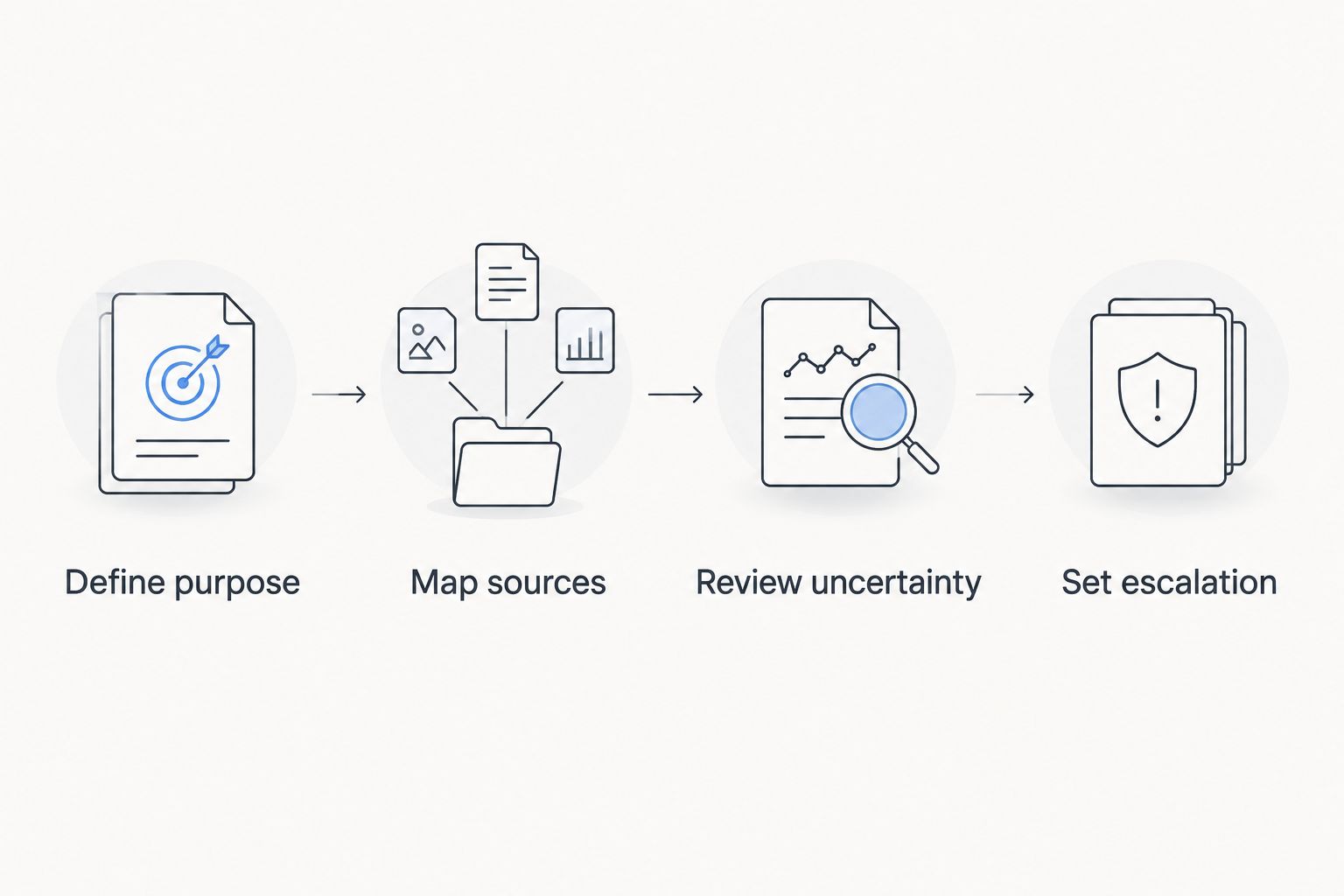
Keep the resulting requirements in the contract and operating procedure. A demonstration shows what a system can display; the agreed scope establishes what your organization is purchasing and who handles exceptions.
How these recommendations are ranked
This 2026 shortlist ranks services by distinct use-case fit: routine hiring, international screening, enterprise governance, and separate threat investigations. It is not a hands-on accuracy benchmark, a turnaround comparison, or a finding that any provider guarantees legal compliance.
The criteria favor purpose fit, traceable evidence, candidate procedures, geographic scope, and operational control. Request current documentation from each finalist and have counsel review the proposed employment-screening process before implementation.
Which background check service should you choose?
Start with Checkr for a routine-hiring shortlist, then compare the proposed workflow against your actual requirements. Choose HireRight for an international-screening evaluation and First Advantage for an enterprise-program evaluation. Treat protective intelligence as a separate engagement with a separate decision purpose.
For a 2026 procurement, require a sample report, search-scope statement, dispute procedure, and responsibility matrix before signing. Reject proposals that leave unavailable searches, identity uncertainty, or employer obligations ambiguous.
The default is not the provider with the longest feature list. It is the provider whose documented scope matches the decision you are authorized to make.
FAQ
What's the best background check service for employers?
Checkr is the starting recommendation here for routine hiring workflows. HireRight suits international-screening evaluation, while First Advantage suits complex enterprise-program evaluation. Confirm current scope and procedures before contracting.
Is HireRight better than Checkr for international hiring?
HireRight is the international-screening shortlist choice in this guide, not a claim of better performance in every jurisdiction. Compare the actual locations, record types, candidate requirements, and handling of unavailable searches.
Can I use a people-search website to screen job applicants?
Do not treat a general people-search result as a substitute for an employment consumer report. Confirm that the service permits the intended employment use and that your process satisfies applicable federal, state, and local requirements.
Do employers need permission before ordering a background report?
Under the FCRA, employers generally must provide a clear written disclosure and obtain written authorization before procuring an employment consumer report. Additional requirements can apply under state or local law.
What happens before an employer rejects someone based on a report?
For an employment decision based on a consumer report, the FCRA requires a pre-adverse-action process that includes providing the report and a summary of rights. A separate adverse-action notice follows the final decision; counsel should review the procedure and applicable local requirements.
Can an OSINT investigation replace an employment background check?
An OSINT investigation does not by itself replace employment screening. Public-source findings still require identity verification, context, and a lawful purpose, and employment-reporting obligations can apply depending on the engagement.
What should I ask a background screening provider before signing?
Ask for the proposed search scope, source and identity-matching procedures, candidate dispute process, and responsibility for required notices. Also inspect access controls, retention terms, and how incomplete searches appear in reports.
One last thing
Ask every finalist to show an inconclusive report—not just a clean report or a confirmed finding. That example exposes whether the service distinguishes missing evidence from negative evidence. Your hiring team needs that distinction before a candidate’s record becomes a decision.