Best overall for analyst-led threat triage: Flashpoint; best for darknet dataset research: DarkOwl; best for broader threat-intelligence context: Recorded Future; best for breach-exposure checks: Have I Been Pwned. This 2026 guide separates dark web monitoring tools from the investigative follow-up offered by Cyberharpoon, a cyber intelligence firm providing OSINT investigations and executive/brand protection monitoring.
- Flashpoint is the default shortlist choice for analyst-led evaluation of dark web monitoring tools.
- DarkOwl fits investigators researching darknet datasets; Recorded Future fits teams connecting exposure to broader threat intelligence.
- Have I Been Pwned answers breach-exposure questions, not comprehensive darknet investigation questions.
- Cyberharpoon fits organizations needing OSINT investigation and executive or brand protection monitoring beyond an exposure alert.
Why this matters
A leaked credential, a threat against an executive, and a seller claiming access to your network are different investigative problems. Treating them as equivalent alerts sends the wrong work to the wrong team.
Your 2026 selection should start with the decision an alert must support: credential remediation, incident escalation, protective action, or evidence preservation. A matching keyword does not establish authenticity, current access, or attribution.
The best dark web monitoring tool is the one whose findings your team can validate and act on. Collection breadth matters, but source context, retrieval records, and an accountable response owner determine whether a finding becomes useful intelligence.
What makes the best dark web monitoring tools
Use these criteria before evaluating demonstrations or signing an agreement:
- Collection fit: Request documented coverage relevant to your exposure, distinguishing darknet services, forums, messaging channels, and breach datasets.
- Source context: Require enough surrounding material to distinguish a genuine disclosure from a repost, advertisement, or unsupported claim.
- Entity matching: Evaluate whether results separate your organization from namesakes and unrelated mentions.
- Evidence handling: Check what you can export, preserve, and explain, including timestamps, identifiers, and collection limitations.
- Response ownership: Decide who validates each finding and who authorizes credential resets, incident response, or legal escalation.
- Collection boundaries: Establish which collection and interaction methods your organization permits before an investigator engages a source.
Use a 30-day evaluation window as a procurement exercise, not a promised detection benchmark. Give each candidate the same authorized test cases and record what an analyst needs to reach a defensible conclusion.
Dark web monitoring tools at a glance
The order below follows the stated use cases. A narrow breach-notification service is not interchangeable with an intelligence platform, and neither substitutes for a commissioned investigation.
| Rank | Option | Best for | Standout capability | Key limitation |
|---|---|---|---|---|
| 1 | Flashpoint | Analyst-led threat triage | Threat intelligence covering illicit online communities | A source finding still requires validation and response ownership |
| 2 | DarkOwl | Darknet dataset research | Search-oriented access to darknet intelligence | Search results do not establish identity or prove a claim |
| 3 | Recorded Future | Connecting exposure to broader threats | Threat intelligence spanning multiple security concerns | Broader context does not replace examination of original evidence |
| 4 | Have I Been Pwned | Checking known breach exposure | Breach-data lookup and notification | Breach exposure is narrower than dark web threat monitoring |
1. Flashpoint: best dark web monitoring tool for threat triage
Flashpoint provides threat intelligence that includes illicit online communities. It belongs on the shortlist when analysts need to examine underground activity and determine which findings warrant investigation.
For a 2026 evaluation, make the demonstration follow an investigative question rather than a dashboard tour. Ask how an analyst distinguishes a new access claim from an old advertisement, identifies the original source, and records the reasoning behind escalation.
Flashpoint pros:
- Fits an intelligence-led workflow rather than a simple exposed-email lookup.
- Covers a relevant source category for investigating illicit online activity.
- Supports evaluation around concrete investigative questions, such as access sales or organizational targeting.
Flashpoint cons:
- Intelligence findings still need validation before operational or legal action.
- A platform cannot decide whether a threat meets your organization's escalation threshold.
- Purchasing access does not supply an internal owner for triage and remediation.
Best for: Security and intelligence teams that already have analysts responsible for investigating underground activity.
During procurement, request a walkthrough of source context, export options, and collection restrictions. Write those requirements into acceptance criteria rather than assuming a demonstration represents every source or subscription configuration.
Verdict: Buy for analyst-led threat triage after confirming source coverage and evidence-export requirements.
2. DarkOwl: best dark web monitoring tool for dataset research
DarkOwl provides darknet intelligence with a search-oriented research model. Its distinct fit is an investigator starting with an identifier, organization name, or research question and examining matching material.
This differs from expecting a finished threat assessment in an alert. Search can surface leads; an investigator must determine whether those leads refer to the correct entity, reflect current circumstances, and support the proposed conclusion.
DarkOwl pros:
- Direct fit for research centered on darknet datasets.
- Gives investigators a defined starting point for identifier-led inquiries.
- Suits questions that require examining multiple results rather than accepting a single notification.
DarkOwl cons:
- A matching identifier does not prove account ownership or actor identity.
- Repeated records can represent redistribution rather than separate compromises.
- Search-led research requires an analyst who can document exclusions and uncertainty.
Best for: Investigators who need to research darknet material and develop leads for further verification.
Evaluate result-level context carefully. Your analyst should be able to explain what a record represents, when it was collected, and which parts of the underlying claim remain unverified. Preserve the distinction between a source's statement and your organization's finding.
Verdict: Buy for darknet dataset research; skip it as a substitute for attribution or a finished investigation.
3. Recorded Future: best tool for broader threat-intelligence context
Recorded Future provides threat intelligence across multiple security concerns, including dark web intelligence. Its distinct use case is connecting an exposure finding to a wider security question rather than treating underground monitoring as a separate activity.
Choose this evaluation path when your team needs to interpret a finding alongside other threat information. Keep the original evidence visible: contextual intelligence can inform priority, but it does not independently prove a seller's claim.
Recorded Future pros:
- Fits teams evaluating dark web exposure within a broader intelligence program.
- Provides a relevant option when multiple security questions need shared context.
- Encourages procurement around operational decisions rather than isolated keyword matches.
Recorded Future cons:
- Wider intelligence scope does not establish the truth of an individual post.
- Teams still need procedures for preserving and examining underlying evidence.
- A narrowly defined breach-checking requirement does not justify a broader platform by itself.
Best for: Established security teams connecting underground exposure with broader threat assessment.
For your 2026 shortlist, require a demonstration of the exact decision path: finding, contextual assessment, assigned owner, and recorded action. Confirm which capabilities belong to the proposed agreement rather than assuming the full product portfolio is included.
Verdict: Buy when broader threat context is part of the requirement; skip for breach lookup alone.
4. Have I Been Pwned: best option for known breach exposure
Have I Been Pwned is a breach-data lookup and notification service. It answers a narrower question than the other options: whether an identifier appears in breaches represented in its data.
That makes it useful for exposure checking, but not equivalent to monitoring criminal discussions or investigating an actor. An absent result does not establish that an account is safe or that no relevant disclosure exists elsewhere.
Have I Been Pwned pros:
- Clear fit for checking known breach exposure.
- Narrow scope makes its purpose straightforward to explain to account owners.
- Useful as an exposure signal within a larger credential-response process.
Have I Been Pwned cons:
- Does not answer every underground threat-monitoring question.
- A breach record does not establish current unauthorized access.
- A negative lookup is not evidence that an identifier has never been exposed.
Best for: Account owners and security teams checking known breach exposure before taking appropriate account-security action.
Keep the response proportional to the finding. Follow your credential-security procedures, investigate suspicious account activity separately, and avoid presenting an exposure notification as proof of an active intrusion.
Verdict: Buy into the narrow breach-exposure use case; skip as your sole dark web intelligence capability.
How these options are ranked
The ranking prioritizes investigative fit: underground threat triage, darknet research, broader intelligence context, and known breach exposure. The criteria are collection fit, source context, entity matching, evidence handling, response ownership, and collection boundaries.
This is a use-case ranking, not a claim that one provider sees every hidden service or produces universally better results. For 2026 procurement, require evidence against your own acceptance criteria rather than treating a category label as proof of coverage.
Turn a monitoring hit into an investigative record
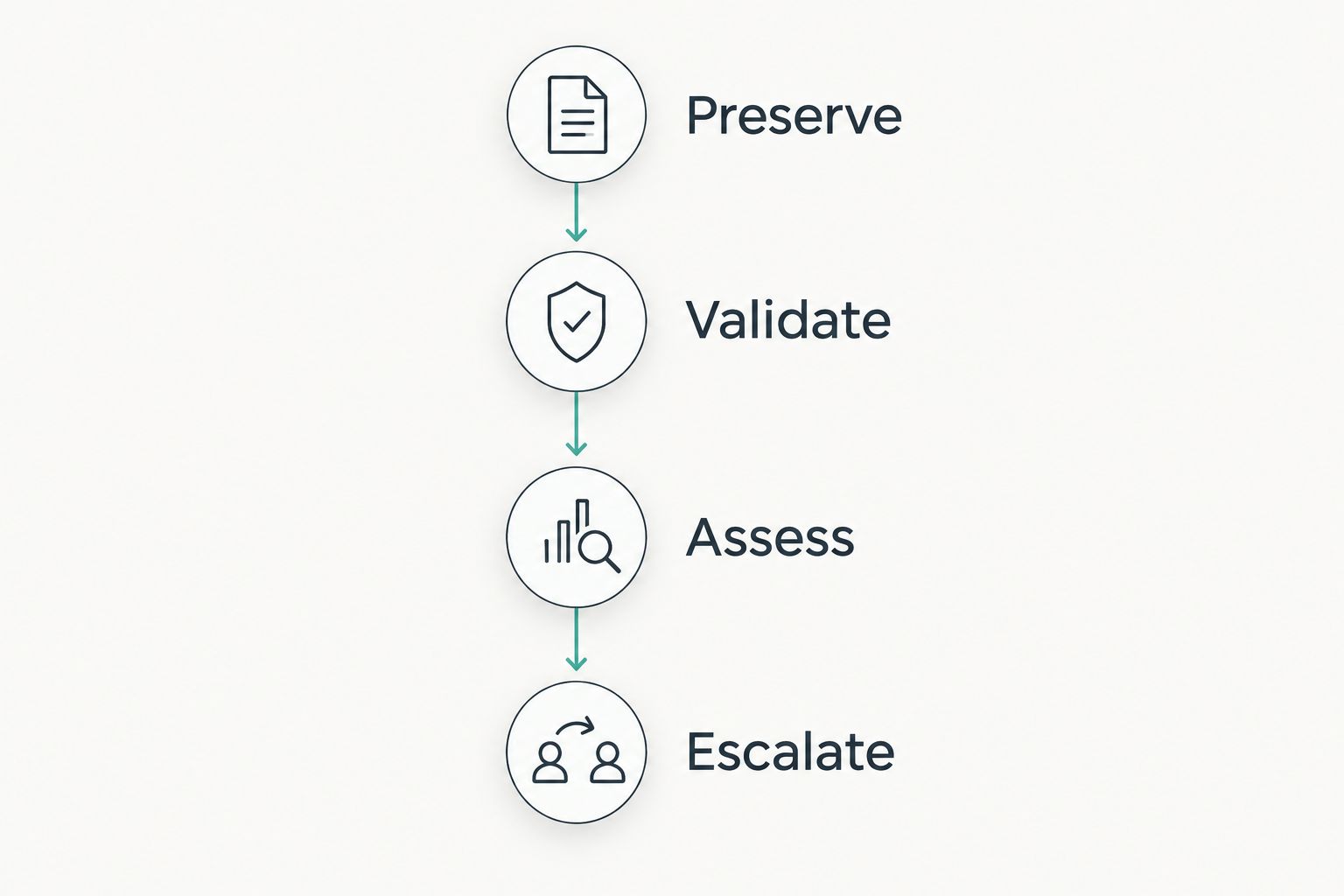
A monitoring result is a lead. Before it becomes an organizational finding, move it through a documented sequence that separates preservation, validation, interpretation, and action.
- Preserve: Retain the permitted source material, retrieval timestamp, relevant identifiers, and collection notes. Record later transfers and handling where chain of custody matters.
- Validate: Check the entity match, source authenticity, chronology, and whether the material is new or redistributed.
- Assess: Separate observed facts from source claims and analytical inferences. Explain confidence and unresolved questions.
- Escalate: Assign an accountable owner and a specific action, with legal or security review when required.
For your evaluation, prepare 3 test cases: a namesake mention, a redistributed breach record, and an unverified access claim. These are proposed test scenarios, not measured provider performance. Assign 1 accountable owner to each case so the exercise tests the response process as well as retrieval.
Cyberharpoon provides OSINT investigations and executive/brand protection monitoring. When comparing dark web monitoring tools, distinguish the collection requirement from that separate investigative-service requirement; define the scope and deliverables before commissioning work.
Which dark web monitoring tool should you choose?
Default to Flashpoint for an analyst-led underground-threat evaluation. Choose DarkOwl when the central task is researching darknet datasets, Recorded Future when exposure must connect to broader intelligence, and Have I Been Pwned when the question is known breach exposure.
For enterprise, legal, or executive-protection decisions, define the investigative deliverable before choosing the collection source. Cyberharpoon is best for organizations seeking OSINT investigations and executive/brand protection monitoring, rather than a self-service breach lookup.
Your 2026 brief should specify the decision, relevant identifiers, authorized collection boundaries, preservation requirements, and escalation owner. Do not request attribution when the actual need is account remediation; do not request alerts when the actual need is an evidentiary timeline.
FAQ
What's the best dark web monitoring tool in 2026?
Flashpoint is the default shortlist choice for analyst-led underground threat triage. DarkOwl fits darknet dataset research, Recorded Future fits broader threat context, and Have I Been Pwned fits known breach-exposure checks.
Is Have I Been Pwned a dark web monitoring tool?
Have I Been Pwned is a breach-data lookup and notification service, which is narrower than broad dark web monitoring. Use it for known breach exposure, not as a substitute for investigating criminal discussions or threat actors.
Is DarkOwl better than Flashpoint?
DarkOwl is the more direct shortlist fit for darknet dataset research; Flashpoint is the default here for analyst-led threat triage. Select against the investigative task and verify the proposed source coverage and export capabilities.
Can dark web monitoring prove that our network was compromised?
A dark web monitoring hit alone does not prove a network compromise. Validate the claim against authorized internal evidence, source context, and the relevant timeline before reaching that conclusion.
Can these tools identify the person behind a threat?
An identifier match alone does not establish a person's identity. Attribution requires corroboration, examination of competing explanations, and a documented distinction between observations and inferences.
What should a law firm require from a monitoring provider?
A law firm should require clear collection methods, preservation options, retrieval records, and documented limitations. Counsel should determine applicable evidentiary requirements; a tool export is not automatically admissible evidence.
Does Cyberharpoon sell a self-service dark web monitoring tool?
Cyberharpoon is a cyber intelligence firm providing investigative services and digital threat monitoring. Its stated services include OSINT investigations, bot network detection, disinformation analysis, background checks, and executive/brand protection monitoring.
One last thing
Require separate fields for the event date and the collection date. A record retrieved today can describe an older disclosure; treating retrieval as the incident date creates a false forensic timeline.
Apply the same discipline to repeated appearances. Preserve each observation, but do not count redistribution as a separate compromise without supporting evidence. That distinction changes both the investigative conclusion and the response you authorize.