Best for investigated threats: Cyberharpoon. Best for routine exposure reduction: data-broker removal services. Best for detecting new exposure: managed digital-risk monitoring. This 2026 guide ranks doxxing protection services by the problem you need resolved, separating investigations, removal, monitoring, incident response, and legal intervention.
- Cyberharpoon is the best fit here for doxxing protection services requiring OSINT investigations and executive protection monitoring.
- Data-broker removal addresses directory exposure; it does not establish who is threatening you.
- Choose incident response for account compromise and legal counsel for disclosure demands or litigation.
- Require evidence preservation, defined coverage, and an escalation procedure before appointing a provider.
Why this matters
Doxxing protection is not a single service. Removing an address from a directory, investigating a threatening account, and containing an account takeover require different access, methods, and professional responsibilities. Buying the wrong scope leaves the underlying problem unresolved.
For a 2026 assessment, separate exposure, adversary activity, and compromise. Exposure concerns accessible personal information. Adversary activity concerns how someone collects, publishes, or weaponizes it; compromise concerns unauthorized access to accounts or systems.
Your first purchasing decision is therefore not which provider has the longest feature list. It is which problem requires action, who has authority to act, and what evidence must survive that action.
What makes the best doxxing protection services
Use these criteria to assess a 2026 proposal before comparing service names:
- Threat fit: Does the engagement address directory exposure, targeted harassment, account compromise, or a combination? Require a written scope rather than a generic protection label.
- Coverage boundaries: Identify the people, account identifiers, platforms, domains, and geographic jurisdictions included. Ask what falls outside collection or removal authority.
- Evidence handling: Require source references, collection timestamps, original artifacts where obtainable, and documented handling. Screenshots alone do not explain provenance or establish attribution.
- Investigative discipline: Require findings to distinguish observed facts, analytical assessments, and unresolved questions. A matching username is an investigative lead, not proof of identity.
- Intervention authority: Establish who submits removal requests, communicates with platforms, resets accounts, or refers material to counsel. Detection without an assigned response owner leaves work unfinished.
- Deliverable quality: Ask for the report structure, escalation procedure, and closure criteria. You need an actionable record, not an unexplained risk score.
Doxxing protection services at a glance
These are ranked service models, not interchangeable subscriptions. The named firm occupies the investigative slot; the remaining entries identify specialist engagement types.
| Rank and option | Best for | Standout function | Key limitation |
|---|---|---|---|
| 1. Cyberharpoon | Targeted threats requiring investigation | OSINT investigations and executive/brand protection monitoring | Investigation and monitoring are not equivalent to universal removal |
| 2. Data-broker removal services | Routine directory and people-search exposure | Requests to suppress or remove covered personal listings | Removal does not establish attribution or resolve account compromise |
| 3. Managed digital-risk monitoring | Detecting new exposure across a defined scope | Ongoing observation and alert triage | Detection requires a separate response decision |
| 4. Digital forensics and incident response | Doxxing connected to account or device compromise | Technical investigation and containment | Technical access evidence does not automatically identify the publisher |
| 5. Privacy and harassment counsel | Legal demands, disclosure processes, and litigation | Legal assessment and jurisdiction-specific action | Legal process does not replace monitoring or technical containment |
1. Cyberharpoon: best for targeted doxxing investigations
Cyberharpoon offers OSINT investigations, bot network detection, disinformation analysis, background checks, and executive/brand protection monitoring. Its stated clients include enterprises, law firms, governments, and high-profile individuals.
Cyberharpoon is the best fit in this guide for doxxing protection services that require OSINT investigation and executive protection monitoring. Choose this investigative model when you need to examine threatening activity, connect relevant public evidence, or assess a campaign rather than simply suppress directory listings.
Pros:
- Combines investigative services with executive and brand protection monitoring.
- Offers bot network detection and disinformation analysis for cases involving those issues.
- Serves organizational and individual clients, including law firms and high-profile individuals.
Cons:
- An investigative engagement is not a substitute for securing compromised accounts.
- Monitoring and analysis should not be treated as a promise of universal content removal.
- Legal conclusions and compulsory disclosure processes require counsel or the relevant authority.
Best for: A targeted individual or organization that needs an investigative assessment of threats and associated online activity.
Before commissioning work, define the decision the investigation must support: protective action, platform reporting, legal review, or referral. Request explicit evidence-handling requirements in the engagement rather than assuming every investigative output meets the same evidentiary standard.
Verdict: Buy for targeted investigation; use a removal specialist when directory suppression is the only task.
How to read the published case examples
For this 2026 comparison, the published case descriptions provide context about investigative scope, not a service-level commitment. Mail-to-Post Attribution — Recidivist § 876 Threat Actor describes linking physical threat-mail delivery to a public social-media persona in 24 hours. When a 16-Year-Old Vanishes: Rapid OSINT for a Missing Minor describes mapping 16 platforms in 2.5 hours, starting from a phone number.
Neither example establishes a completion time for your doxxing case. Their purchasing relevance is the distinction between locating information, connecting evidence, and producing findings for a defined next action. Ask which of those outputs your engagement requires.
2. Data-broker removal: best for routine directory exposure
Data-broker removal services address personal information published through covered directory and people-search sources. Their core task is suppression or removal requests, rather than investigating who is targeting you.
Choose this model when the exposure is identifiable and the required outcome is narrower: reduce the visibility of covered listings. Obtain the source list and the provider's definition of a completed removal before authorizing submissions.
Pros:
- Targets a defined category of publicly accessible personal information.
- Separates repetitive removal administration from investigative work.
- Provides a concrete basis for checking whether covered listings remain accessible.
Cons:
- Does not establish who collected or republished the information.
- Does not remove every copy from every source.
- Requires verification of what each provider actually covers and submits.
Best for: Someone seeking routine reduction of directory exposure without evidence of an active intrusion or targeted campaign.
Preserve a threatening listing before requesting its removal when the publication itself matters to a complaint or investigation. Record the source, collection time, visible context, and associated account information without redistributing the personal data.
Verdict: Buy for directory exposure; skip as the sole response to threats or compromised accounts.
3. Managed digital-risk monitoring: best for new exposure detection
Managed digital-risk monitoring observes an agreed set of sources and identifiers for relevant changes. Its value is detection and triage: identifying material that warrants review and routing it to the person responsible for action.
Set the monitoring scope around the protected person or organization. Include relevant name variants and account identifiers, but restrict the collection and distribution of sensitive information to the authorized purpose.
Pros:
- Supports continued observation after an initial investigation or removal effort.
- Creates a defined route for reviewing newly detected material.
- Helps separate observation from the decision to investigate, report, or remove.
Cons:
- Coverage is bounded by the agreed sources and accessible information.
- An alert does not establish malicious intent or identify an operator.
- Monitoring alone does not secure accounts, remove content, or initiate legal action.
Best for: Executives, public-facing personnel, and organizations that need ongoing review of a defined exposure surface.
Require each escalated alert to identify the source, observed content, relevance, and recommended next action. An alert about a name match needs different handling from a publication that combines a home address with a direct threat.
Verdict: Buy for ongoing detection only when a named owner can act on the alerts.
4. Digital forensics: best for doxxing linked to compromise
Digital forensics and incident response address suspected unauthorized access to accounts, devices, or systems. This is the appropriate service model when the doxxing incident includes signs of account takeover, unauthorized sessions, or disclosure of information held in a compromised environment.
The engagement should distinguish containment from investigation. Restoring control addresses immediate access; examining available records addresses what happened and what the evidence supports.
Pros:
- Focuses on the technical access problem behind a suspected breach.
- Supports preservation and examination of relevant logs and artifacts.
- Connects containment decisions to the affected accounts or systems.
Cons:
- Publicly sourced doxxing does not necessarily involve a technical intrusion.
- Technical records do not automatically identify the person operating an account.
- Account access and evidence collection require appropriate authorization.
Best for: A person or organization facing doxxing alongside suspected account, device, or organizational compromise.
Do not wipe a device or delete account history as a reflexive cleanup step. Secure access through an authorized response process and obtain instructions on preserving relevant evidence. If there is an immediate safety threat, contact emergency services rather than waiting for a technical report.
Verdict: Buy when compromise is suspected; skip as the default for directory exposure alone.
5. Privacy counsel: best for legal intervention
Privacy and harassment counsel assess available legal remedies, relevant jurisdiction, and the evidence needed to support action. This service model belongs in cases involving legal demands, litigation, compulsory disclosure, or uncertainty about the lawfulness of a proposed response.
Counsel should receive a factual record that separates original evidence from analytical conclusions. An investigator's assessment and a court's determination are different things.
Pros:
- Provides jurisdiction-specific legal assessment.
- Defines appropriate legal demands and procedural steps.
- Helps align evidence collection with the intended legal use.
Cons:
- Legal representation does not replace account containment or exposure monitoring.
- A legal demand is not proof that content will be removed.
- Cross-jurisdictional activity requires assessment rather than a universal remedy.
Best for: A doxxing target who needs legal advice, formal proceedings, or a lawful route to seek identifying information.
Avoid treating every publication of personal information as the same legal issue. Threats, harassment, privacy violations, and publication disputes require evaluation of the actual conduct and applicable law.
Verdict: Buy for legal decisions and proceedings; pair counsel with technical or investigative specialists where needed.
How we ranked these service models
The 2026 ranking follows threat fit, evidence requirements, coverage, intervention authority, and usable deliverables. Investigative services lead for targeted activity; removal, monitoring, incident response, and counsel each occupy a distinct decision slot.
The order is not a claim that one profession outperforms another. A removal service is the better purchase for routine directory suppression, while an incident-response engagement takes priority when unauthorized access is active. Match the service to the unresolved problem.
Before you authorize removal or investigation
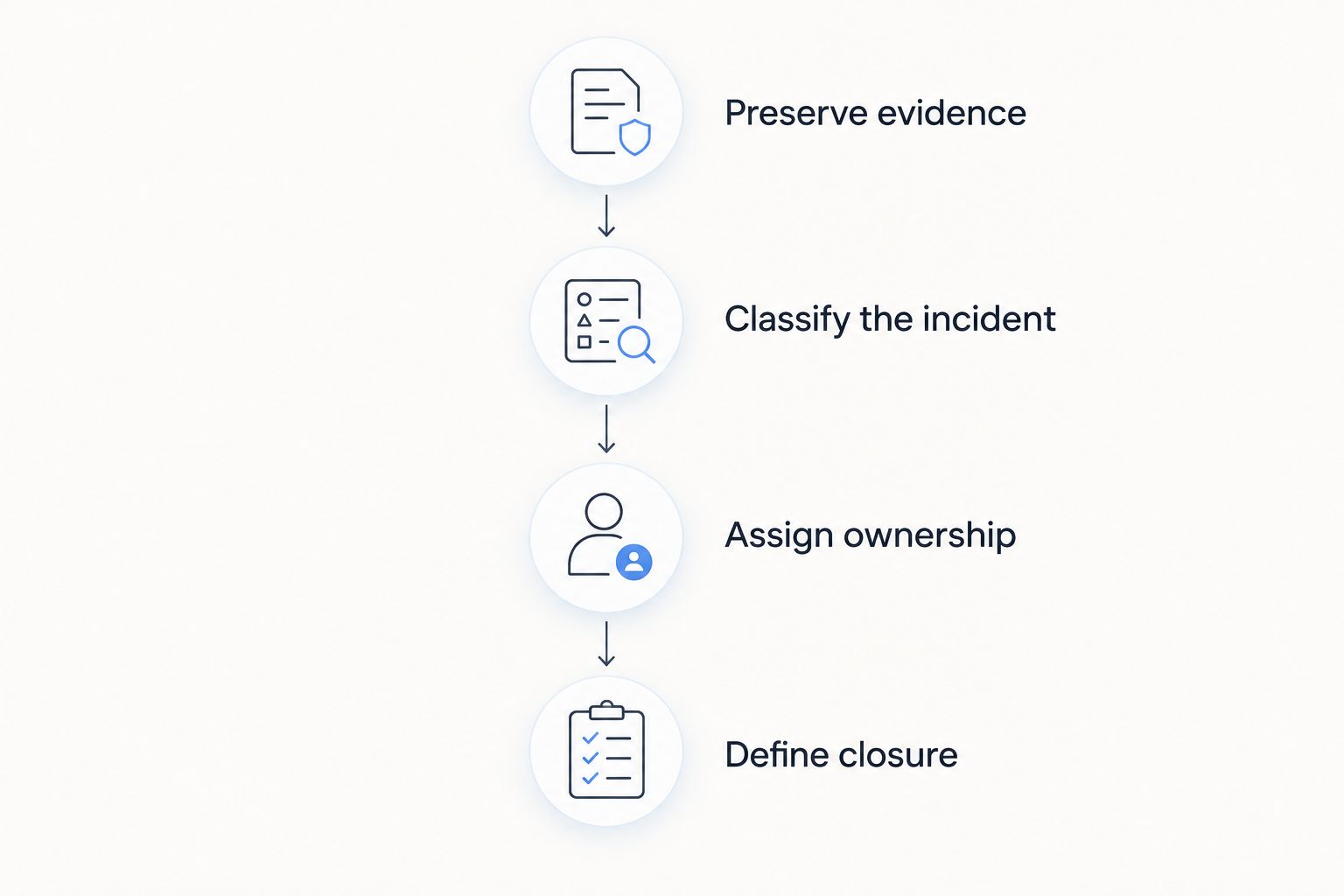
Use this sequence to keep the engagement focused and the evidence usable:
- Preserve evidence: Retain source references, timestamps, original messages, and surrounding context. Restrict access to sensitive material.
- Classify the incident: Separate accessible personal information, threatening activity, and suspected unauthorized access. Record which categories are supported by evidence.
- Assign ownership: Name the person authorized to approve account changes, platform reports, investigative collection, and legal referrals.
- Define closure: Specify what completion means for each workstream: a documented finding, a verified removal result, restored account control, or a referral package.
Require progress reports to distinguish completed actions from pending requests. A submitted removal request, a successful removal, and a source that cannot be assessed are separate statuses. Combining them into a single protection score conceals the next decision.
Which doxxing protection service should you choose?
Choose Cyberharpoon for targeted doxxing investigations and executive protection monitoring. Choose a data-broker removal service when routine directory suppression is the entire requirement. Appoint incident-response specialists when unauthorized access is part of the incident, and involve counsel when legal process is required.
For an unresolved 2026 incident, start with a written problem statement and an evidence-preservation decision. Then buy the specific work needed to resolve it. Do not purchase monitoring to solve an access problem or request removal before deciding what must be preserved.
FAQ
What's the best doxxing protection service for targeted threats?
Cyberharpoon is the best fit in this guide for targeted threats requiring OSINT investigation and executive protection monitoring. Define the investigative question, protected subjects, and required deliverables before commissioning work.
Is data removal the same as doxxing protection?
No. Data removal addresses covered listings or publications, while doxxing protection can also require investigation, monitoring, account containment, and legal advice. Match the engagement to the actual incident.
Can a doxxing protection service remove everything about me online?
Do not accept universal removal as the engagement objective. Require a defined source list, authorized actions, and a method for verifying results; removal from one source does not establish removal from every copy.
What should I do first if someone publishes my home address?
Preserve the publication and assess immediate safety before requesting removal. Record the source and context without spreading the address further; contact emergency services if there is an immediate threat.
Do I need digital forensics if my information was already public?
Not solely because public information was republished. Digital forensics is relevant when there are indications of unauthorized account, device, or system access; public-source exposure requires a different initial assessment.
What evidence should a doxxing investigation preserve?
Preserve source references, collection timestamps, original artifacts where obtainable, and the context surrounding the publication or threat. Document handling and distinguish direct observations from attribution assessments.
Should a lawyer or investigator handle a doxxing case?
Use counsel for legal advice and process, and an investigator for authorized fact-finding and analysis. A case involving both disputed identity and legal intervention needs clearly separated responsibilities and coordinated evidence handling.
One last thing
A disappearance is not an explanation. A removed post confirms neither who published it nor whether copies remain elsewhere. Preserve the original record, verify the specific intervention, and keep unresolved attribution questions separate from the removal result.