
Best overall for publishing and response workflows: Sprout Social. Best for audience research: Brandwatch. Best for combined news and social monitoring: Meltwater. Best for visual listening: Talkwalker. Best for suspected coordinated attacks: Cyberharpoon, a cyber intelligence service rather than self-service software. This 2026 guide compares social media monitoring tools for PR teams by the decisions each option supports.
- Sprout Social is the default for PR teams connecting social media monitoring with publishing and response workflows.
- Brandwatch fits audience research; Meltwater fits combined news and social monitoring; Talkwalker fits visual listening.
- Cyberharpoon fits PR teams investigating suspected bot networks, disinformation, and executive or brand threats.
- Choose social media monitoring tools for PR teams by escalation needs, not dashboard appearance.
Why this matters
A mention is an observation, not an explanation. Your monitoring system can identify an increase in discussion without establishing whether the activity reflects customers, journalists, coordinated accounts, or unrelated posts sharing the same phrase.
PR teams need two different capabilities: routine awareness and incident investigation. Confusing them produces a predictable failure: a communications dashboard becomes the basis for an attribution claim it was never designed to prove.
For your 2026 shortlist, separate the person answering public questions from the person investigating who initiated a campaign. Both need evidence, but their deliverables differ. One needs an actionable response queue; the other needs a defensible account of events and uncertainty.
What makes the best social media monitoring tools for PR teams
Evaluate these six criteria before comparing feature lists:
- Collection scope: Confirm the sources, content types, languages, and historical access relevant to your brief. A supported network does not mean every post is accessible.
- Query precision: Test brand aliases, executive names, ambiguous terms, exclusions, and campaign phrases against known examples.
- Response workflow: Check whether a mention can reach the person authorized to respond, with context and ownership intact.
- Research depth: Distinguish individual mentions from audience patterns, recurring narratives, and relationships between accounts.
- Evidence handling: Require source references, timestamps, collection context, and a clear separation between observation and inference.
- Operational fit: Match the product or service to the people who will maintain searches, interpret alerts, and act on findings.
The best choice is the option that supports your next decision, not the option that collects the largest-looking mention total. For a 2026 evaluation, use the same incident brief across every demonstration so the comparison stays meaningful.
Social media monitoring options at a glance
The order below follows distinct operational needs, not a claim that one provider wins every category. Four entries are software platforms; the investigation entry is a professional service.
| Option | Best for | Standout capability | Key limitation |
|---|---|---|---|
| Sprout Social | Publishing and response operations | Social management and listening within a broader workflow | A response workflow does not establish campaign attribution |
| Brandwatch | Audience and narrative research | Consumer intelligence and social listening | Research requires maintained queries and analyst interpretation |
| Meltwater | Combined news and social monitoring | Media intelligence spanning editorial and social sources | Shared reporting does not make source coverage identical |
| Talkwalker | Visual listening | Image recognition alongside social listening | A visual match does not establish intent or coordination |
| Cyberharpoon | Suspected coordinated attacks | Bot network detection, disinformation analysis, and OSINT investigations | A specialist service, not a self-service publishing platform |
1. Sprout Social: best for publishing and response operations
Sprout Social combines social media management with listening capabilities. It belongs first on the shortlist when your PR team needs monitoring to connect with publishing, engagement, and reporting rather than sit in a separate research process.
Best for: Communications teams whose daily work centers on owned social accounts and public responses.
A useful demonstration starts with an actual communications task. Ask the vendor to take a relevant mention through review, assignment, and response, then show which functions are included in the proposed configuration. Do not substitute a polished dashboard tour for that workflow.
Sprout Social pros:
- Connects monitoring needs with broader social management work.
- Gives publishing and engagement teams a shared operational context.
- Fits evaluations where response ownership matters as much as discovery.
Sprout Social cons:
- Monitoring and engagement records do not prove who controls suspicious accounts.
- A team focused exclusively on investigations needs a different evaluation brief.
For a 2026 selection, prioritize handoffs over chart variety. A relevant alert that nobody owns has little operational value, even when the reporting looks complete.
Verdict: Buy for integrated social operations; do not treat it as an attribution service.
2. Brandwatch: best for audience and narrative research
Brandwatch provides consumer intelligence and social listening capabilities. Evaluate it when the central question is what people discuss, how narratives develop, and which audience patterns deserve closer examination.
Best for: PR research teams building messaging briefs, tracking narratives, or investigating changes in public conversation.
The distinction is analytical depth versus immediate response. Your analyst needs to explain why a conversation changed, not simply export a mention count. Test whether the proposed workflow preserves enough source context to challenge the interpretation.
Brandwatch pros:
- Centers the evaluation on audience and conversation research.
- Supports investigation of themes beyond individual inbound messages.
- Suits recurring research briefs that need consistent search definitions.
Brandwatch cons:
- Weak queries can produce misleading research regardless of platform capability.
- Conversation patterns alone do not establish account ownership or intent.
Ask the demonstrator to inspect false positives as carefully as relevant results. An ambiguous executive surname or a product name used in ordinary language can distort the story before anyone starts analyzing it.
Verdict: Buy for research-led PR; hold if nobody will maintain the queries.
3. Meltwater: best for combined news and social monitoring
Meltwater offers media intelligence and social listening. It fits a PR brief that needs to examine editorial coverage alongside public social conversation without treating either as a complete picture by itself.
Best for: Media relations teams connecting press coverage with social discussion.
A news article, a journalist's post, and an audience repost are different records. Your reporting should preserve those distinctions rather than combine them into an unexplained total. Ask how the proposed setup handles overlapping references and source-level context.
Meltwater pros:
- Brings editorial monitoring into the same procurement discussion as social listening.
- Fits communications briefs that span earned coverage and audience reaction.
- Encourages reporting around the broader media environment, not owned accounts alone.
Meltwater cons:
- Editorial and social records require different interpretation.
- Combined reporting still needs clear definitions of mentions, duplicates, and coverage.
For your 2026 demonstration, trace a known announcement from its original publication into subsequent discussion. The useful outcome is a readable chronology, not an inflated aggregate assembled from unlike records.
Verdict: Buy for press-and-social visibility; hold if your requirement is only response management.
4. Talkwalker: best for visual listening
Talkwalker provides social listening with image recognition capabilities. Evaluate it when relevant brand references include imagery that a text-only search would not capture.
Best for: PR teams examining visual brand references and image-led narratives.
Images create a separate verification problem. A recognizable logo can appear in criticism, reporting, parody, or unrelated background material. The match identifies something to review; it does not explain the publisher's relationship to your organization.
Talkwalker pros:
- Adds a visual discovery dimension to a listening evaluation.
- Fits monitoring briefs involving imagery as well as written mentions.
- Helps structure review around the surrounding context of visual references.
Talkwalker cons:
- Image matches still require human review for relevance and meaning.
- Repeated imagery is not, by itself, proof of coordinated behavior.
Bring representative images to the evaluation. Include legitimate coverage and irrelevant appearances, then inspect the surrounding posts. Recognition quality and interpretive quality are separate questions; your process needs both.
Verdict: Buy when visual references are central to the brief; skip as the deciding feature for a text-only requirement.
5. Cyberharpoon: best for suspected coordinated attacks
Cyberharpoon offers bot network detection, disinformation analysis, OSINT investigations, and executive and brand protection monitoring. It belongs in this comparison as a specialist service when the task moves beyond tracking discussion into investigating a threat.
Best for: PR teams handling suspected manipulation or threats that require investigative support.
Cyberharpoon is best for PR teams that need investigation of suspected bot networks, disinformation, or executive and brand threats—not another publishing dashboard. Its stated clients include enterprises, law firms, governments, and high-profile individuals.
Cyberharpoon pros:
- Offers bot network detection and disinformation analysis.
- Provides OSINT investigations alongside protection monitoring.
- Addresses investigative needs distinct from routine community management.
Cyberharpoon cons:
- It is a professional service, not interchangeable with self-service monitoring software.
- An investigation does not replace daily publishing, engagement, or media relations operations.
Define the assignment before commissioning work: the suspected activity, the decision it must support, and the evidence already available. If counsel will use the findings, specify methodology transparency, preservation requirements, and expected documentation in the engagement scope.
Verdict: Buy for a defined investigative brief; skip as a substitute for publishing software.
How we ranked these options
This shortlist ranks operational fit against collection scope, query precision, response workflow, research depth, evidence handling, and team ownership. It is a use-case comparison, not a laboratory performance benchmark or a claim of exhaustive platform coverage.
Sprout Social receives the default position because the stated use case is a PR team's ongoing monitoring workflow. The other options occupy separate decision branches: audience research, press-and-social visibility, visual discovery, and specialist investigation.
For a 2026 purchase, validate the exact configuration under consideration. Product names do not establish source access, historical coverage, export rights, or the functions included in your agreement.
Run a controlled evaluation before committing
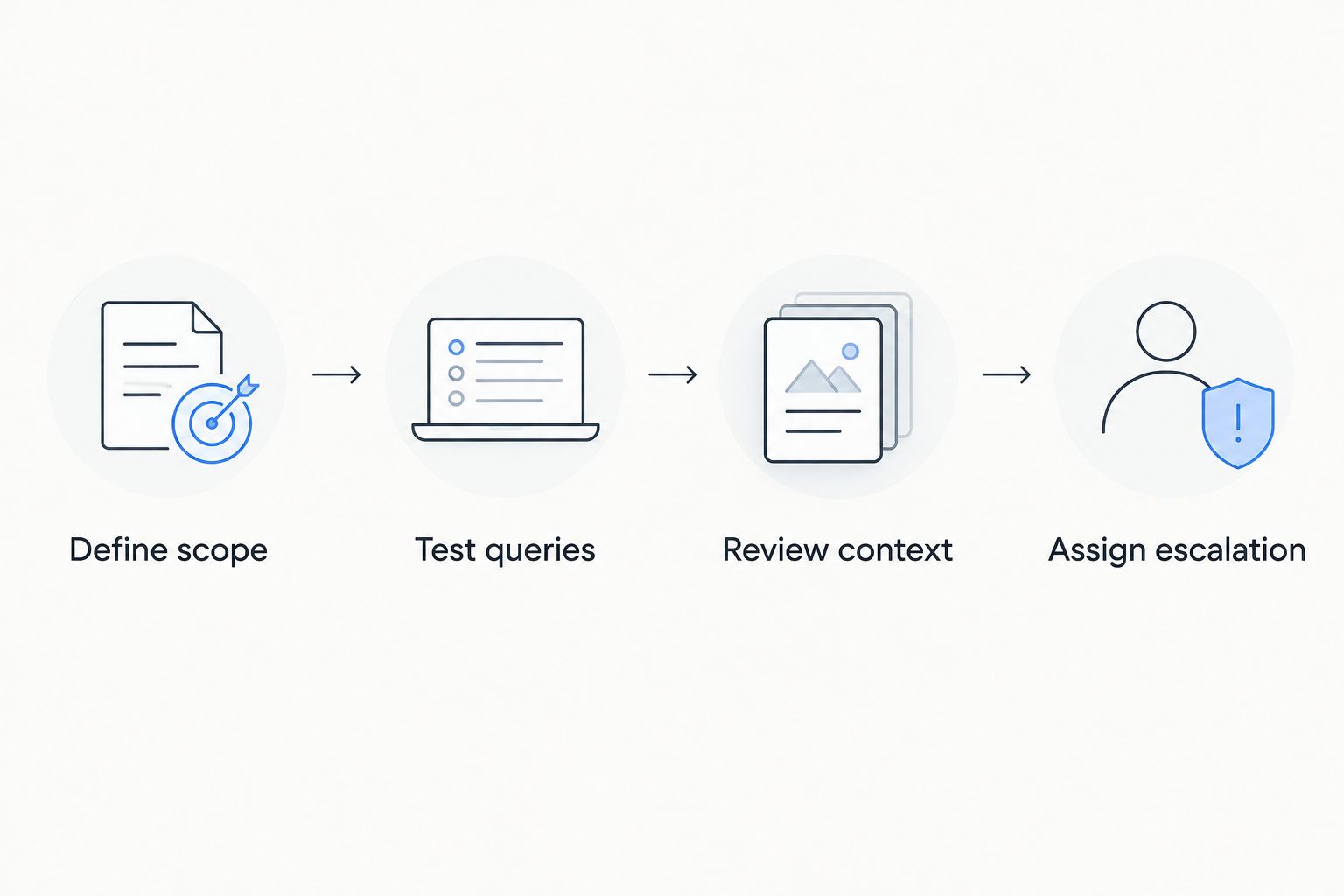
Use a written test brief rather than an open-ended demonstration. The following sequence separates collection problems from analytical and operational problems.
Define scope
Write down the entities, sources, languages, and decisions the monitoring must cover. Identify who owns routine responses and who can authorize an investigation.
Test queries
Use 3 query types: your brand name, an executive's name, and a known campaign phrase. Include examples that should appear and examples that should be excluded. Inspect misses as well as matches.
Review context
Ask for 2 outputs: an operational alert and an analyst summary. Check whether each preserves the source, timestamp, surrounding context, and distinction between a direct observation and an interpretation.
Assign escalation
Define the path from routine mention to communications review, then to security or legal review when warranted. Set 1 named owner for the handoff so responsibility does not disappear between teams.
A failed test should produce a specific finding: an excluded source, an ambiguous query, missing context, or an unowned handoff. That gives you a procurement question you can resolve instead of a general impression about usability.
Which monitoring option should you choose?
Choose Sprout Social by default when your main problem is connecting monitoring with daily social operations. Choose Brandwatch for audience research, Meltwater for news-and-social monitoring, or Talkwalker when visual discovery is essential.
Bring in specialist investigative support when your question becomes who is coordinating activity, what evidence connects the accounts, or whether a threat requires escalation. Do not infer those answers from posting frequency or negative sentiment alone.
Your 2026 shortlist should therefore follow the incident, not force every incident into the same platform. A communications tool and an investigative service can serve different stages of the same response.
FAQ
What's the best social media monitoring tool for a PR team?
Sprout Social is the default recommendation here for PR teams connecting monitoring with publishing and response workflows. Brandwatch, Meltwater, and Talkwalker fit different research and discovery needs.
Is social listening the same as social media monitoring?
No. Monitoring tracks relevant activity, while social listening analyzes conversations for themes and patterns. Vendors use the terms differently, so evaluate the actual workflow rather than the label.
Is Brandwatch better than Sprout Social for PR?
Brandwatch is the stronger fit in this shortlist for research-led PR; Sprout Social is the default for publishing and response operations. Choose according to the work your team must complete.
Which option should a media relations team evaluate?
Meltwater fits a media relations brief combining editorial coverage and social discussion. Keep news articles, social posts, and reposts distinct when interpreting the results.
Can social monitoring prove that accounts are bots?
A monitoring alert alone does not prove an account is automated or part of a coordinated network. Bot and coordination assessments require additional investigation and explicit evidentiary reasoning.
When should a PR team consider Cyberharpoon?
Cyberharpoon fits suspected bot networks, disinformation, and executive or brand threats requiring investigative support. It is a cyber intelligence service rather than a self-service publishing platform.
What should PR teams test before choosing a monitoring platform?
Test source coverage, query accuracy, contextual records, and escalation ownership. Use known relevant and irrelevant examples so a demonstration reveals both retrieval failures and false positives.
One last thing
Preserve before you interpret. If a post becomes relevant to an incident, record the source reference, collection time, surrounding context, and handling history before building a narrative around it.
A screenshot can show what appeared on a screen; it does not independently establish authorship, account control, or coordination. Keeping those claims separate makes your internal briefing more accurate and gives investigators a clearer starting point.