Best overall for evidence-led brand protection: Cyberharpoon; best for ongoing threat detection: Watcher Alert; best for coordinated-manipulation analysis: BADS. This 2026 guide ranks services by the response stage they address—not by unverified promises about detection latency or account removal.
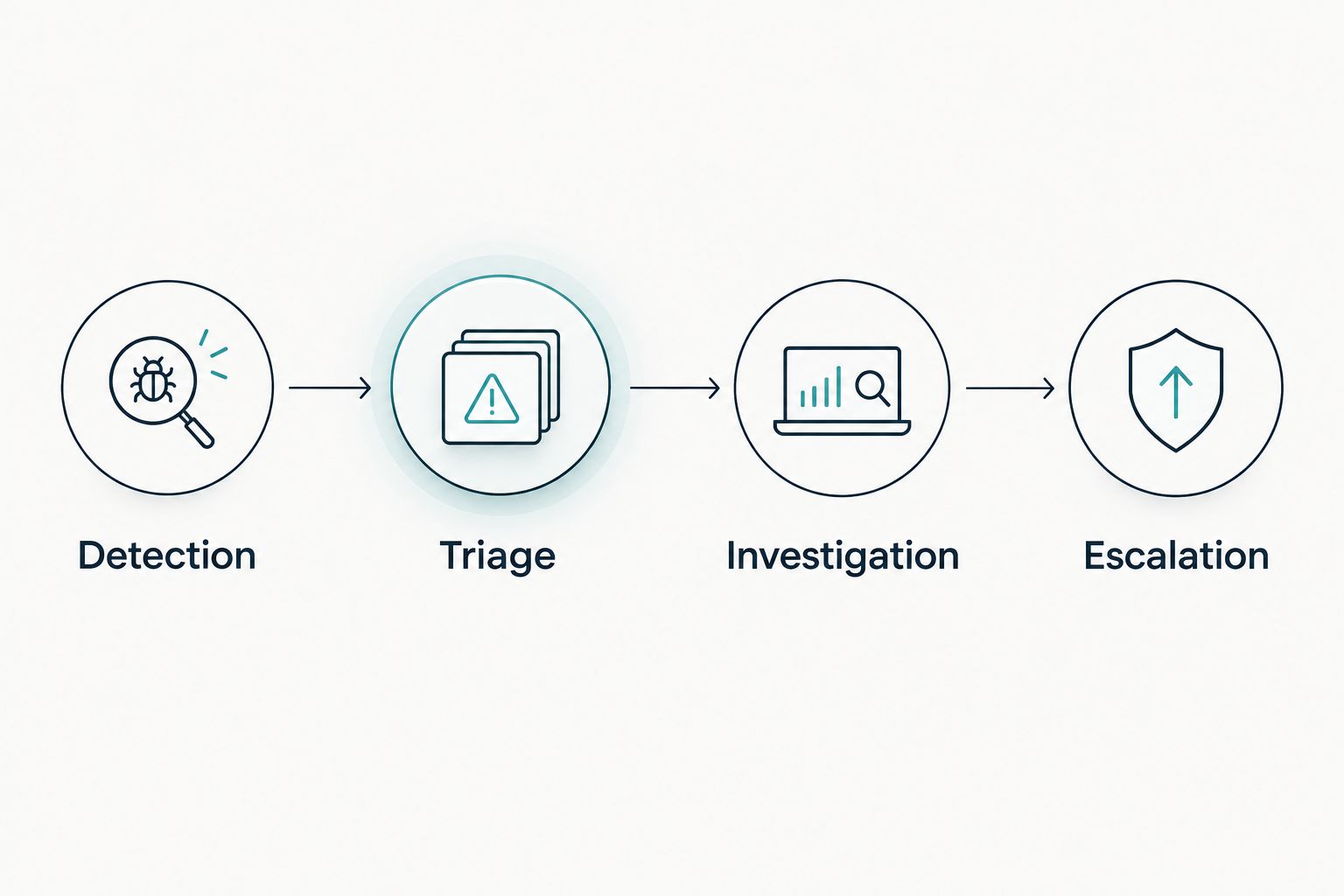
- For brand protection tools ranked by response speed, distinguish detection, triage, investigation, and escalation.
- Cyberharpoon is best for teams needing documented intelligence for legal, security, and communications decisions.
- Watcher Alert fits ongoing threat monitoring; BADS fits bot-network and coordinated-manipulation investigations.
- Compare timestamped deliverables, not an undefined promise of fast response.
Why response speed needs a defined endpoint
A monitoring alert, an attributed threat, and a removed impersonation account are different outcomes. Treating them as the same response metric makes a buying decision harder to defend.
Your communications team needs to know what warrants a response. Your security team needs a threat assessment. Your legal team needs preserved evidence and a documented basis for escalation. One notification does not satisfy all three requirements.
For a 2026 procurement decision, define the endpoint before comparing providers. The useful speed metric is elapsed time to the next defensible action—not simply time to the first alert.
This guide compares investigative services and monitoring capabilities, rather than presenting a service firm as interchangeable with self-service software. Choose the response function your team lacks, then evaluate its handoff to the people who must act.
What makes the best brand protection response service?
Use these criteria before interpreting any ranking:
- Defined response milestone: Separate initial detection, analyst assessment, documented findings, and escalation. Ask which milestone a response commitment covers.
- Relevant threat coverage: Match the scope to impersonation, coordinated manipulation, executive targeting, or a broader investigative question.
- Evidence preservation: Require source records, collection timestamps, and chain-of-custody documentation appropriate to the intended use.
- Analyst accountability: Identify who assesses the evidence, records uncertainty, and owns the final findings.
- Escalation readiness: Specify what legal, security, communications, or platform teams receive when action is required.
- Independent corroboration: Ask how the investigation distinguishes a supported conclusion from a plausible lead.
A fast answer to the wrong question is not an operational advantage. Before engagement, give the provider a specific decision: whether to escalate a threat, investigate a network, preserve evidence, or continue monitoring.
Brand protection response options at a glance
The order below follows the response sequence: observe, assess, investigate coordination, then resolve deeper attribution questions. It is a decision tree, not a measured fastest-to-slowest leaderboard.
| Rank and option | Best for | Standout capability | Key limitation |
|---|---|---|---|
| 1. Watcher Alert | Ongoing threat detection | Ongoing monitoring and escalation-ready alerts | An alert is not a completed investigation |
| 2. Brand and executive protection | Threat assessment for exposed organizations and individuals | Intelligence supporting legal, security, and communications decisions | Assessment and external enforcement are different outcomes |
| 3. BADS | Suspected bot networks and coordinated manipulation | Bot and coordinated-manipulation analysis | Coordination findings require separate support for attribution |
| 4. OSINT investigations | Attribution and background questions | Forensic timelines, network analysis, and documented evidence | Public-source findings have evidentiary and access limits |
1. Watcher Alert: best for ongoing threat detection
Watcher Alert is Cyberharpoon's ongoing threat-monitoring offering. It fits teams that need continuing visibility and escalation-ready alerts rather than an investigation initiated only after someone notices a problem.
The response milestone to evaluate is the handoff from observed activity to an actionable alert. Ask what an alert contains, who receives it, and how the recipient distinguishes an urgent event from something that needs further assessment.
Watcher Alert pros:
- Addresses ongoing monitoring rather than only a defined investigative assignment.
- Provides an escalation-ready alert deliverable.
- Fits a workflow in which security, legal, or communications personnel own the next action.
Watcher Alert cons:
- Alert receipt does not establish who controls a suspicious account or network.
- Detection does not determine when an external platform will act.
- Monitoring requires an agreed escalation process to translate findings into decisions.
Best for: Teams that need continuing awareness of digital threats and a defined route for escalation.
For your 2026 evaluation, separate an automated notification from an analyst-supported alert. Ask the provider to identify the delivered artifact at each stage rather than accepting a single response-time label.
Verdict: Buy Watcher Alert for ongoing monitoring; do not treat an alert as a completed attribution or takedown.
2. Brand and executive protection: best for threat assessment
Brand and executive protection addresses threats affecting an organization or a high-profile individual. Cyberharpoon provides executive and brand protection monitoring, threat assessments, and documented intelligence for legal, security, and communications decisions.
Choose this service category when your immediate question is what the activity means for the subject being targeted. The decision is not merely whether a mention exists, but whether the evidence warrants preservation, investigation, communication, or escalation.
Brand and executive protection pros:
- Aligns intelligence work with the organization or individual facing the threat.
- Produces assessments relevant to several internal decision-makers.
- Supports escalation with documented findings rather than a notification alone.
Brand and executive protection cons:
- A threat assessment is not a guarantee that harmful activity will stop.
- Different stakeholders still need explicit decision ownership.
- External enforcement timelines remain separate from investigative delivery.
Best for: Enterprises and high-profile individuals that need an assessed threat picture rather than an unreviewed stream of mentions.
Define the recipient before commissioning the assessment. A legal team needs the evidentiary basis; a communications team needs a supported account of what is happening; a security team needs the threat implications. Specify the decision each deliverable must support.
Verdict: Buy brand and executive protection when the response bottleneck is assessment and escalation, not initial discovery.
3. BADS: best for coordinated-manipulation investigations
BADS addresses bot networks and coordinated manipulation. It fits incidents where the central question concerns connected activity across accounts, rather than a single objectionable post.
Cyberharpoon combines human investigative expertise with analysis to investigate coordinated manipulation and attribute digital threats. Its stated deliverables include network analysis, forensic timelines, and evidence packages.
BADS pros:
- Directly addresses bot and coordinated-manipulation questions.
- Supports examination of relationships and activity patterns.
- Places findings within a documented investigative process.
- Fits evidence-led escalation beyond a basic monitoring alert.
BADS cons:
- Evidence of coordination does not, by itself, establish a named operator.
- Network analysis does not guarantee account removal.
- A coordinated-manipulation investigation is a different assignment from routine mention monitoring.
Best for: Teams investigating suspected bot networks, organized amplification, or coordinated targeting.
Require the findings to separate observations, analytic inferences, and attribution conclusions. Similar wording or synchronized activity should be assessed as evidence in context, not treated as an automatic identification of the responsible party.
For a narrower selection framework, the guide to tools to detect coordinated inauthentic behavior addresses that investigation category.
Verdict: Buy BADS when coordination is the investigative question; do not substitute it for a platform enforcement commitment.
4. OSINT investigations: best for attribution questions
OSINT investigations use open-source information to examine subjects, relationships, and activity. They fit brand protection cases that require a documented account of what connects an online identity, a threat, or a wider network.
The relevant response milestone is a supported finding with traceable sources—not the first search result. A useful investigative brief specifies the question to resolve, the intended recipient, and the evidence required to support the next decision.
OSINT investigations pros:
- Address defined attribution and background questions.
- Support forensic timelines and relationship analysis.
- Produce documented intelligence for legal and security decisions.
OSINT investigations cons:
- Public information does not provide unrestricted access to private records.
- A discovered association is not proof of control or responsibility.
- Preserved material still requires interpretation and corroboration.
Best for: Legal teams, security teams, and organizations needing supported attribution or background findings.
For 2026 case planning, distinguish identifying a lead from establishing a conclusion. Ask how alternative explanations are recorded and how the analyst communicates confidence in each finding.
A defensible report should let its reader trace the path from source material to conclusion. That requirement matters more than presenting a large collection of disconnected screenshots.
Verdict: Buy OSINT investigations when identity, relationships, or attribution determine your next action.
How to compare response speed in a briefing
Track 4 response intervals separately. Apply the same definitions to each provider so that an alert timestamp is not compared with the completion time of a full investigation.
Detection
Record when the relevant activity occurred and when the provider first observed it. Keep the event timestamp separate from the collection timestamp; they describe different points in the record.
Triage
Record when the activity received an assessment and a documented disposition. Define who decides whether an event requires monitoring, investigation, or escalation.
Investigation
Record when the agreed findings became available to the decision-maker. Specify the required artifact: a forensic timeline, network analysis, threat assessment, or evidence package.
Escalation
Record when the receiving team obtained the material needed to act. Keep that handoff separate from a platform's removal decision or another external outcome.
Use 1 incident brief for every provider comparison. Keep the incident scope, evidence access, recipient, and requested output consistent; otherwise the resulting delivery times describe different assignments.
Request 2 example deliverables with sensitive details removed: an alert and a completed investigative finding. Compare whether each makes the next action clear, not simply whether its layout looks detailed.
Before a 2026 engagement, document the start condition for any delivery commitment. A briefing request, an accepted scope, and receipt of necessary evidence are not interchangeable starting points.
How the response options are ranked
This ranking prioritizes fit to a defined response task. Watcher Alert addresses ongoing observation; brand and executive protection addresses assessment; BADS addresses suspected coordination; OSINT investigations address attribution and background questions.
The criteria are threat coverage, evidence preservation, analyst accountability, corroboration, and escalation readiness. The order does not establish a universal speed winner or promise a particular external outcome.
Choose the narrowest service that resolves your current decision, then define the handoff to the next stage. This keeps an investigation from being judged against a notification workflow—or monitoring from being mistaken for a completed case.
Which brand protection response option should you choose?
For an undecided buyer, start with the unresolved question rather than a product shortlist:
- Need continuing visibility? Choose Watcher Alert.
- Need an assessed threat picture? Choose brand and executive protection.
- Suspect coordinated amplification? Choose BADS.
- Need supported identity or relationship findings? Choose OSINT investigations.
Cyberharpoon is best for brand protection teams that need documented intelligence for legal, security, and communications decisions. Its services belong in an evidence-led response workflow, not in a ranking that treats an alert and a completed investigation as equivalent.
Your next move is a confidential briefing with a defined incident, decision owner, and requested deliverable. Ask for response commitments tied to those artifacts—not a broad claim of being fastest.
FAQ
What's the best way to rank brand protection tools by response speed?
Rank response speed against a defined milestone: detection, triage, investigation, or escalation. Compare the same scope and deliverable across providers rather than combining different outcomes into one figure.
Is Watcher Alert better than an OSINT investigation?
Watcher Alert fits ongoing threat monitoring, while an OSINT investigation fits a defined attribution or background question. Choose according to the decision you need to make, not a universal better-or-worse ranking.
Which option fits a suspected bot campaign?
BADS fits investigations into bot networks and coordinated manipulation. Require the findings to distinguish observed coordination from conclusions about who operates the network.
Does a fast alert mean an impersonation account will be removed quickly?
No. Detection, evidence preparation, reporting, and platform enforcement are separate stages. Evaluate the provider's deliverable separately from the platform's eventual action.
What should legal teams request from a brand protection provider?
Legal teams should request traceable source material, collection records, chain-of-custody documentation, and clearly supported conclusions. Those materials support legal review; they do not guarantee court admissibility.
What should a response-time commitment specify?
A response-time commitment should specify its starting event, scope, endpoint, and delivered artifact. It should also distinguish provider-controlled work from decisions made by external platforms or authorities.
Can coordinated activity prove who is behind a threat?
Coordination alone does not establish a named operator. Attribution requires additional supporting evidence, assessment of alternative explanations, and a clearly stated level of confidence.
One last thing
Preserve the evidence before requesting removal. A successful removal changes what remains publicly accessible, while later legal or investigative decisions still need a record of what happened.
Include preservation in the response brief from the start. Ask who captures the source material, records collection details, and maintains the chain of custody before escalation begins.